New Advances in Nature-Inspired Cancer Detection and Targeted Treatment

By creating hybrid compounds, a Pakistani chemist has succeeded in creating several new molecules with high inhibitory power against cancer-related enzymes.
MSTF Media reports:
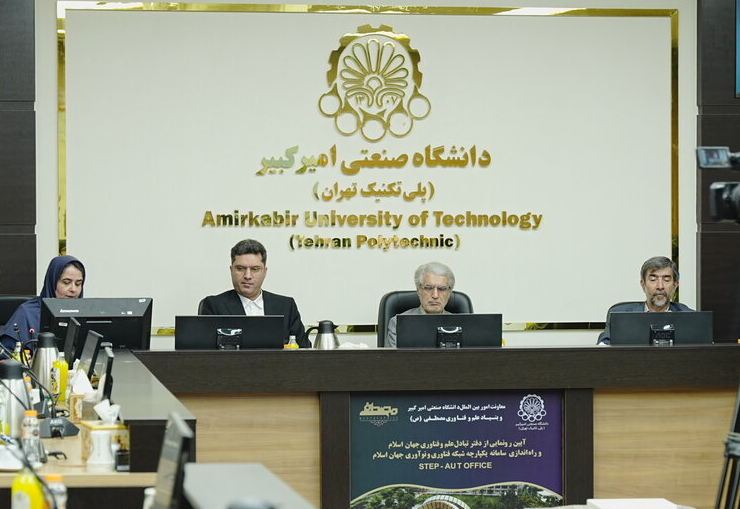
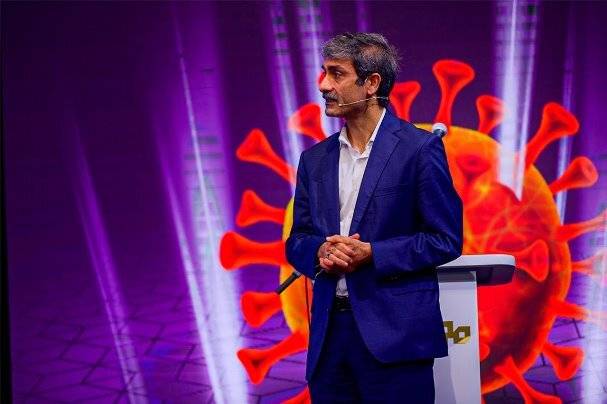
Science and Technology Exchange Program (STEP) is held during the Mustafa(pbuh) Prize Week, aiming to share knowledge among Muslim scientists. The 10th STEP hosted prominent international figures whose achievements push the boundaries of knowledge, including Professor Aamer Saeed, a distinguished professor of chemistry at Quaid-i-Azam University, Islamabad, and one of the leading figures in chemistry in Pakistan.
In an interview with the MSTF, Professor Saeed spoke about his continuous efforts to synthesize bioactive compounds inspired by nature. He also mentioned the development of fluorescent markers to accurately identify cancer cells; research that many experts believe could pave the way for the development of more effective, targeted drugs with fewer side effects to combat cancer.
Many of the medicines used today around the world to treat various diseases, including types of cancer, microbial infections, and inflammatory diseases, have their roots in nature. Valuable compounds can be found in plants, fungi, bacteria, and even some marine organisms, but are available in very small amounts, as little as a few milligrams per kilogram of raw material. For this reason, scientists around the world are trying to recreate these compounds in the laboratory or create improved and industrializable versions of them, so that the production process becomes easier and more economical, and they have greater therapeutic effectiveness and fewer side effects.
Furthermore, one of the fundamental challenges in modern medicine is the accurate and early identification of cancer cells in living tissues of the body. Cancer cells often resemble healthy cells in appearance and are difficult to detect in the early stages. New technologies such as fluorescent probes allow researchers to track these cells with high precision, perform in vivo imaging, and even deliver anticancer drugs directly to the tumor site without harming healthy tissues. Such approaches, known as targeted therapies, could revolutionize personalized medicine and improve patients' quality of life.
Professor Aamer Saeed, head of the Department of Chemistry and the Faculty of Natural Sciences at Quaid-i-Azam University, Islamabad, is one of the most prolific and influential chemists in Pakistan. He has published nearly 700 research articles in prestigious international journals and authored several specialized books printed by leading global publishers. His research area lies mainly at the interface between organic chemistry, medicinal chemistry, and biotechnology.
He describes his research area as “broad and interdisciplinary,” dividing it into several main categories; first, Saeed is interested in “the total synthesis of natural products.”
“As you know, natural products are obtained from sources such as plants, fungi, and bacteria, but their quantities in nature are very low and their extraction is costly,” he elaborated. “Our main task is to discover and determine the chemical structure of these compounds, and then we try to synthesize similar and even improved materials in the laboratory.”
The discovery and synthesis of these compounds allows Saeed and his team to understand which part of the natural molecule is responsible for the therapeutic effect and how it can be altered.
“Deploying this method, we can prepare many similar derivatives and compounds and modify the structure of the natural substance,” he noted. “Sometimes a small change in a functional group increases the anticancer effect several folds.”
The second aspect of Professor Saeed’s research concerns the synthesis of heterocyclic compounds (ring structure). According to him, “More than 80 percent of the drugs available on the market, whether natural or synthetic, are made from heterocyclic compounds.”
They have utilized a method called molecular hybridization to provide a wide range of compounds by joining together bioactive units from two, three, or four different molecules. The great advantage that this method provides is that it allows for the combination of the desirable properties of all the constituent units into a single molecule.
In this manner, Professor Saeed and his colleagues have been able to discover several new molecules that are much more effective than current drugs in inhibiting key enzymes involved in cancer growth and inducing apoptosis (programmed cancer cell death).
Nevertheless, a major problem persists: regardless of how freely they can design, synthesize, and manipulate these molecules on a laboratory scale, due to financial constraints, lack of advanced clinical trial infrastructure and industrial collaboration in Pakistan, Professor Saeed and his team cannot advance this research to the stage of drug production and market entry. The challenge is common in the majority of developing countries.
Asked how fluorescent markers can identify cancer cells more accurately than traditional methods, Professor Saeed explained, Fluorescent markers enable the tracking of cancer cells because cancer cells have much higher metabolic activity than normal cells. They need large amounts of glucose and other nutrients to grow and divide rapidly.
“We design fluorescent sensors in a way that they can bind to glucose or glucose transporters on the cell membrane,” he added. “Since glucose consumption in cancer cells is several times higher than in healthy cells, these sensors preferentially accumulate within cancer cells and begin to fluoresce after being activated by ultraviolet or visible light. In this way, tumors can be seen even in the early stages of formation.”
This process can be followed using various methods, such as imaging living organisms (for example, injecting into laboratory mice with tumors). “We inject the marker into mice and then use special fluorescence cameras to observe how the marker accumulates precisely at the tumor site and enters the cancer cells,” he stated.
“What's even more interesting is that we can combine these fluorescent markers with several anticancer drugs. Because the marker goes directly to the target (cancer cell), the accompanying drug is also delivered to the exact same cell, and common side effects of chemotherapy such as hair loss, bone marrow damage, and digestive problems are greatly reduced. This method is what is referred to as ‘Precision Medicine,’ and the future of cancer treatment is moving towards it.”