STEP-AUT Office to Connect Scientists and Universities Across the Islamic World
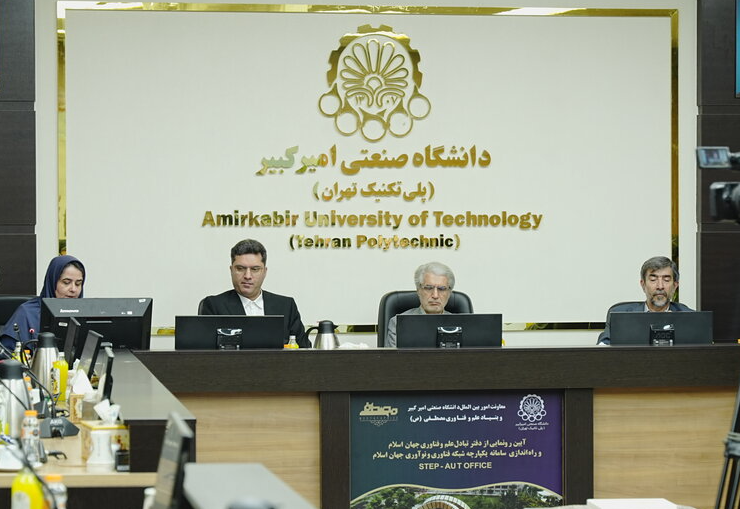
The Science and Technology Exchange Program Office for the Islamic World (STEP-AUT) has been unveiled at Amirkabir University of Technology to expand and systematize scientific and technological exchanges, advance science diplomacy, and connect the university with a wider network of scientists, researchers, and universities across the Islamic world.
According to the Communications and Outreach Department of the Mustafa (PBUH) Science and Technology Foundation, the office has been established jointly by the Foundation and Amirkabir University of Technology. It aims to bring together dispersed scientific capacities across the Islamic world in an active, structured, and measurable network, while creating opportunities for broader scientific cooperation, faculty and student exchanges, research placements, and joint projects.
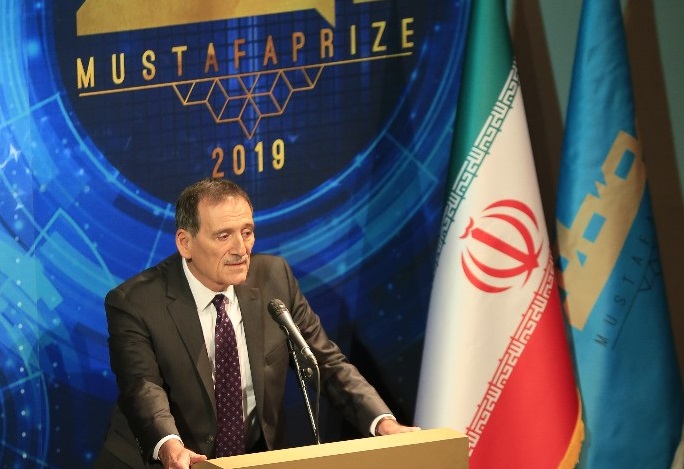
Speaking at the unveiling ceremony, Ali Soroush, President of Amirkabir University of Technology, described the expansion of scientific relations and networking as a continuation of a deeply rooted tradition in Iranian and Islamic culture. He said that science cannot be confined and that the advancement and dissemination of knowledge have always formed part of the scientific and cultural heritage of Iran and the Islamic world.
Emphasizing the need to move beyond individual and fragmented contacts toward organized, network-based cooperation, Soroush said that the more structured scientific relations become, the broader their impact and outcomes will be. He added that the STEP-AUT Office can provide a platform for developing sustained interaction among scientists and universities.
Soroush described international scientific engagement as a two-way process. He noted that, while Iran and its universities can benefit from global experience, they also have the capacity to exert influence in many fields of science and technology and to move toward scientific leadership—an outlook, he said, that should be instilled in young researchers.
Ehsan Ghaboul, Head of the Center for International Scientific Cooperation at Iran’s Ministry of Science, Research and Technology, identified synergy, convergence, and networking as key components of science diplomacy. He said that substantial potential exists to expand Iran’s scientific and academic cooperation with other countries, particularly those in the Islamic world, and that this potential should be translated into sustained and purposeful collaboration.
He described the establishment of the Science and Technology Exchange Program Office for the Islamic World as a step toward facilitating and accelerating scientific relations among Islamic countries. Referring to the work of the Mustafa (PBUH) Science and Technology Foundation in this field, he called the Foundation a source of pride for Iran’s science diplomacy.
Ghaboul added that showcasing Iran’s scientific and technological capabilities and achievements—and moving beyond a siloed approach toward a coherent network—are essential to the development of science diplomacy.
He also stressed the importance of using integrated data and systems for decision-making and policymaking, saying that bringing together the capacities of universities, research institutes, and science and technology parks could prevent information fragmentation and strengthen data governance in science diplomacy.
Abdolrasoul Dinarvand, a member of the Board of Directors of the Mustafa (PBUH) Science and Technology Foundation, referred to the Foundation’s mission to build networks among Muslim scientists worldwide and said that launching the STEP-AUT Office at Amirkabir University of Technology represents the first example of this model of cooperation between the Foundation and a leading university.
He said the office is intended to facilitate scientific and technological cooperation among universities and scientists across the Islamic world. Scientific exchange, he emphasized, is a two-way process, and Iran—given its scientific capacities and standing—can play an influential role in this network.
Dinarvand said that scientific leadership becomes complete when scientific capability is transformed into technology, power, wealth, and, ultimately, public welfare, adding that stronger scientific relations can help advance this process.
Stressing the need to expand scientific engagement, enable researchers to participate in conferences, and increase faculty and student exchanges, he said the answer to existing concerns surrounding international engagement is not to restrict scientific relations, but to expand opportunities for scientific cooperation while taking the necessary considerations into account.
Somayeh Akbari, Vice President for International Affairs at Amirkabir University of Technology, outlined the office’s objectives, saying it will work to establish structured connections, provide systematic access to the network of scientists and Mustafa Prize laureates, and transform individual relationships into broader, organized collaboration.
Referring to the 10th STEP program, held at Amirkabir University of Technology with approximately 72 professors and scientists from 34 countries, she said that hosting the event at the university was intended to sustain the relationships established there and turn initial matchmaking into operational and lasting cooperation.
Akbari listed the development of an international network, expansion of academic exchanges, creation of an integrated platform for exchange programs, and consolidation of Amirkabir University of Technology’s position in the Islamic world’s science and technology ecosystem among the office’s missions.
She said the office’s work will begin with networking and connection-building, then proceed through talent exchange, capacity-building, empowerment, policymaking, and foresight, ultimately generating tangible outcomes, attracting investment, advancing technological achievements, and creating social impact.
Mehdi Amini, Director of International Cooperation Development at the Mustafa (PBUH) Science and Technology Foundation, highlighted the Islamic world’s extensive human capital. He noted that the 57 member states of the Organisation of Islamic Cooperation are home to more than two billion people and have sizeable populations of young people and university students—a capacity that, he said, should be converted into scientific and technological cooperation through targeted networks.
He said one of STEP’s central missions is to bridge the gap between capacities and opportunities, enabling students and researchers to more easily find scientific peers and research groups in other countries and turn scientific connections into practical collaboration.
Amini emphasized that the success of the STEP-AUT Office should not be measured by the number of administrative activities it conducts, but by the scientific connections it creates, the mobility of faculty members and students, and the number of collaborations that progress from dialogue to action.
He identified the Young Scientists’ Fellowship Program (YSFP), Faculty Mobility among Islamic Countries (FMIC), Smart Seasonal Schools, specialized webinars, and the Science, Technology and Innovation Policy Lab as among the office’s resources. These programs, he said, can transform occasional, individual-centered scientific relationships into continuous, structured, and measurable processes.
Amini added that, by drawing on the capacities of the Mustafa (PBUH) Science and Technology Foundation and Amirkabir University of Technology, the office can become an active hub in the Islamic world’s science and technology network.
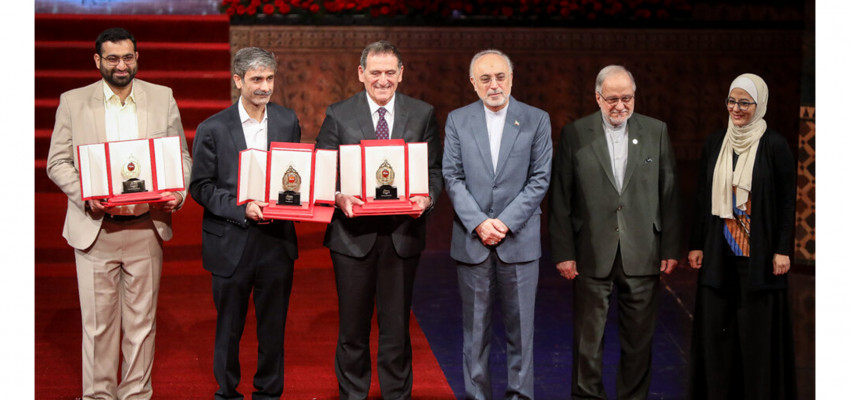
The Science and Technology Exchange Program Office for the Islamic World (STEP-AUT) was unveiled at the conclusion of the event.
The office has begun operating with a vision to broaden Amirkabir University of Technology’s access to scientific capacities across the Islamic world, facilitate exchanges among scientists, faculty members, and researchers, and transform fragmented connections into a sustainable and influential network.