Risen like a Phoenix from the Ashes: a Woman’s Life Trajectory from Lebanon Civil War to Harvard
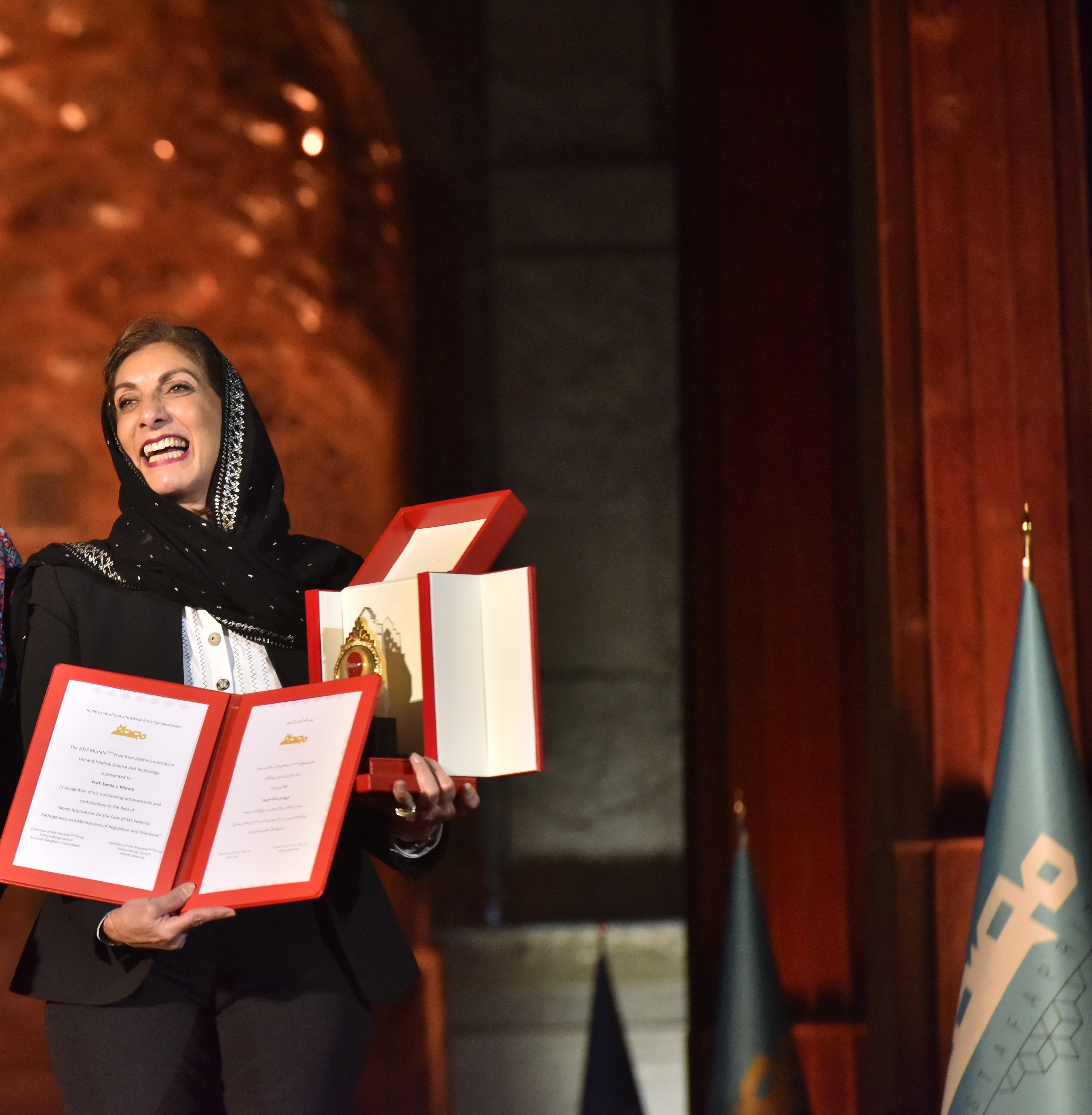
Samia Khoury is a symbol of hope who rose above the ashes of war to achieve international acclaim in science.
MSTF Media reports:
A teenage Samia Khoury was no older than fifteen when Lebanon was struck by a civil war in 1975, a war which threw people’s lives off course and obscured the future for them.
Any adolescent would be devastatingly affected by school closures, bloodshed on the streets, and a seriously injured father. For the teenage Khoury, however, such conditions meant not the end of her dreams, but a beginning.
Having entertained the dream of being a doctor since early childhood, Khoury did not let the horrifying bombings and dark days with no electricity dishearten her. She imagined herself in a doctor’s white robe; not only wasn’t this image fading in her mind, but it was becoming ever more present in the days of conflict. Indeed, witnessing the war-induced tumult and casualties inspired her to become somewhat of savior.
Although the schools were closed for the long term in those days, she kept studying with the help of her parents and even finished textbooks before a new school year started. Even at nights, she did it by the candlelight. It was thus that she became a role model for her two younger siblings.
Every page that she perused was a bridge to a bright future. She finally managed to come first in Lebanon’s university entrance exams. Entering the American University of Beirut served as the springboard that led her to Harvard. She became a member of Alpha Omega Alpha Honor Medical Society in 1983 and a year following her graduation she started a specialist program in Multiple Sclerosis (MS).
She carried out her internship and residency in Cleveland and then her fellowship in Harvard Medical School. Since its beginning, Khoury’s studies in neuroimmunology faced a gap, that is efficient treatments for MS patients.
Back then, there was no certain treatment for MS. Therefore, this research gap inspired Khoury’s rigorous research. Her husband, Mohamed Sayegh, whom she had met at the American University of Beirut, played a substantial role as a companion and asupporter, both emotionally and academically.
In 2011, when Khoury and her husband were at the height of their scientific success, they turned back to Lebanon to make use of their years of research and knowledge gained at Harvard for the betterment of their home country. Since the very beginning, Khoury had been determined to go back to serve her country after graduating.
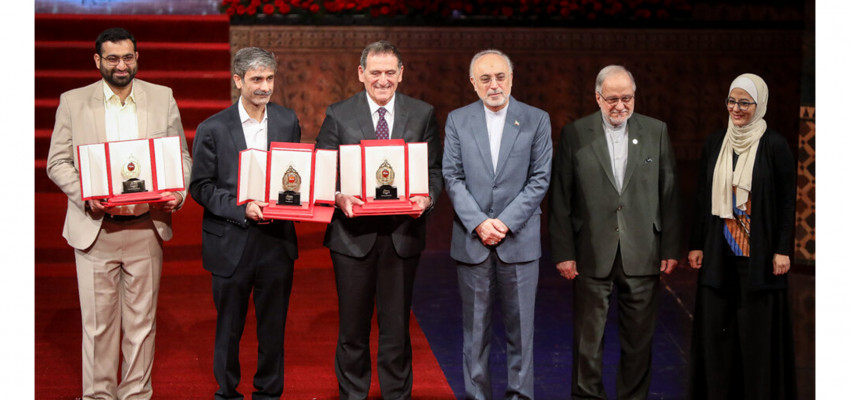
In 2021, Sayegh won the Mustafa(pbuh) Prize for “Novel Therapies to Improve Renal and Cardiac Allograft Outcomes.” That was how Khoury became familiar with the Prize and joined this scientific community.
The turning point of Khoury’s academic work was the establishment of a multidisciplinary MS center in Lebanon. The center was founded on the belief that there is a thin line between psychological damage and physical damage and that the treatment of patients requires a comprehensive approach.
The MS center consists of a specialist team of nurses, pharmacists, social workers, and psychotherapists who provide holistic care for over 2,000 patients.
A multidimensional treatment model involves monitoring the progression of the disease, treating depression, holding physiotherapy sessions and providing palliative care. Khoury has been able to introduce a fresh approach to treating MS. This breakthrough, along with her efforts at identifying factors that cause diseases and their mechanisms of regulation and tolerance, earned Khoury a Mustafa(pbuh) Prize in 2023, making the her and Sayegh the first couple who have both won a Mustafa(pbuh) Prize.
Khoury’s research has played a substantial role in advancing knowledge about MS on an international scale. Her studies have focused on the various clinical forms of the disease and on identifying biomarkers to predict its progression.
One of her most prominent findings is the role of the thinning of retinal layer in patients with Relapsing-Remitting MS (RRMS). The thinning, which can be observed using optical coherence tomography (OCT), can predict the disease two years prior to the onset of symptoms.
Khoury has made use of EAE, an animal model of brain inflammation, to thoroughly examine the inflammation and immunity mechanisms affecting the development of the disease. This has allowed her to analyze the role of such environmental factors as vitamin D deficiency, smoking, and geographic conditions in MS.
According to her findings, vitamin D deficiency decreases the speed of brain processing based on the SDMT Symbol Digit Modalities Test and is related to considerable changes in brain size, especially the cerebellum.
She has concluded that getting vitamin D from sunlight or supplements, especially in the Middle East countries, can help improve some symptoms. Nevertheless, she has emphasized that supplements must be taken under a doctor’s supervision.
Khoury has also been investigating the role of risk factors such as smoking in worsening the disease. Smokers develop MS at a higher speed and their brain deteriorates faster. Moreover, her analysis of 50,000 patients shows that geographic factors, such as sun exposure and climate, play a role in the development of the Secondary Progressive MS (SPMS) and that people inhabiting northern regions are at higher risk.
Also, her studies on Epstein-Barr virus, or EBV, have shown that MS patients have more EBV antibodies compared to normal people. This lead to a theory that entailed B lymphocytes infected with the virus can badly affect the immune cells’ functions through a molecule named exosome. However, it is important to note that the virus is not the main cause of the disease and merely increases the chance of its development.
Khoury’s research on cytokines such as TGF-β and on edible antigens and development of immune tolerance has also paved new paths towards improving MS symptoms and EAE model.
It is also worthy to mention Khoury’s humanitarian endeavors. Being concerned with the less fortunate patients, she has collected money for treatment costs so that all MS patients, regardless of their financial status, can receive health care.
Her role in training a new generation of researchers at Harvard or Lebanon has made her an influential scientific figure that has linked science with social responsibility.
Finding herself amidst war and adversity, Samia Khoury managed to rise above the ashes with determination and faith in science. She has not only found a light in her own dark path, but also casted that light on the lives of thousands of patients. Her life story is the perfect embodiment of the saying that even in the darkest of times hope can serve as your light.