Young Scientist’s Latest Discovery: Cancer Cells Can No Longer Outsmart Drugs
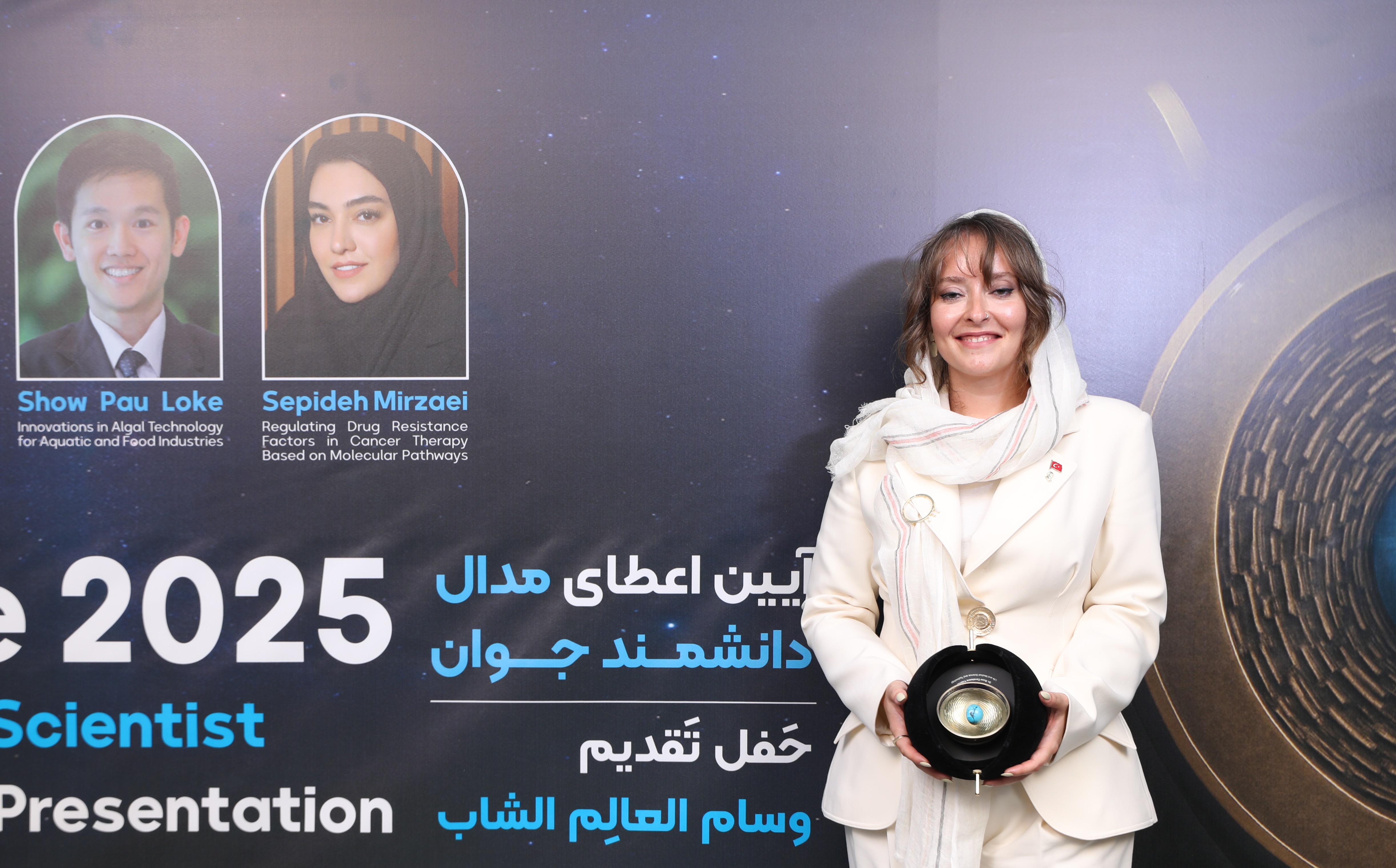
The 2025 Young Scientist Medal winner, Buse Cevatemre Yildirim, has unlocked the smart mechanism of cancer cells that enables them to evade chemotherapy.
MSTF Media reports:
Cevatemre Yildirim, the winner of the first edition of The Young Scientist Medal, has gained significant insights based on her research on cancer cells’ drug resistance. Her findings help to tackle the problem which is considered the biggest issue in treating cancer.
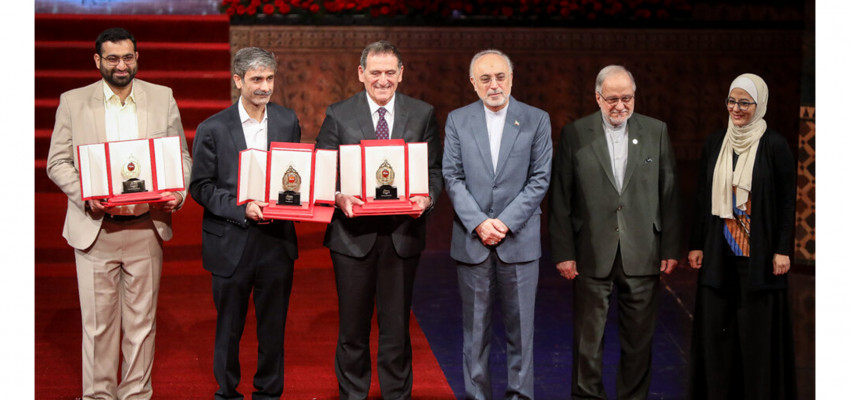
The first Young Scientist Medal award ceremony, held simultaneously with the 6th Mustafa(pbuh) Prize award ceremony last September, honored three promising young scientists from Islamic countries. The Medal established owing to the endowments of Professor Ugur Sahin and Professor Omid Farokhzad, Mustafa(pbuh) Prize laureates in 2019 and 2023is awarded to scientists under 40 with innovative scientific achievements that have improved the human life.
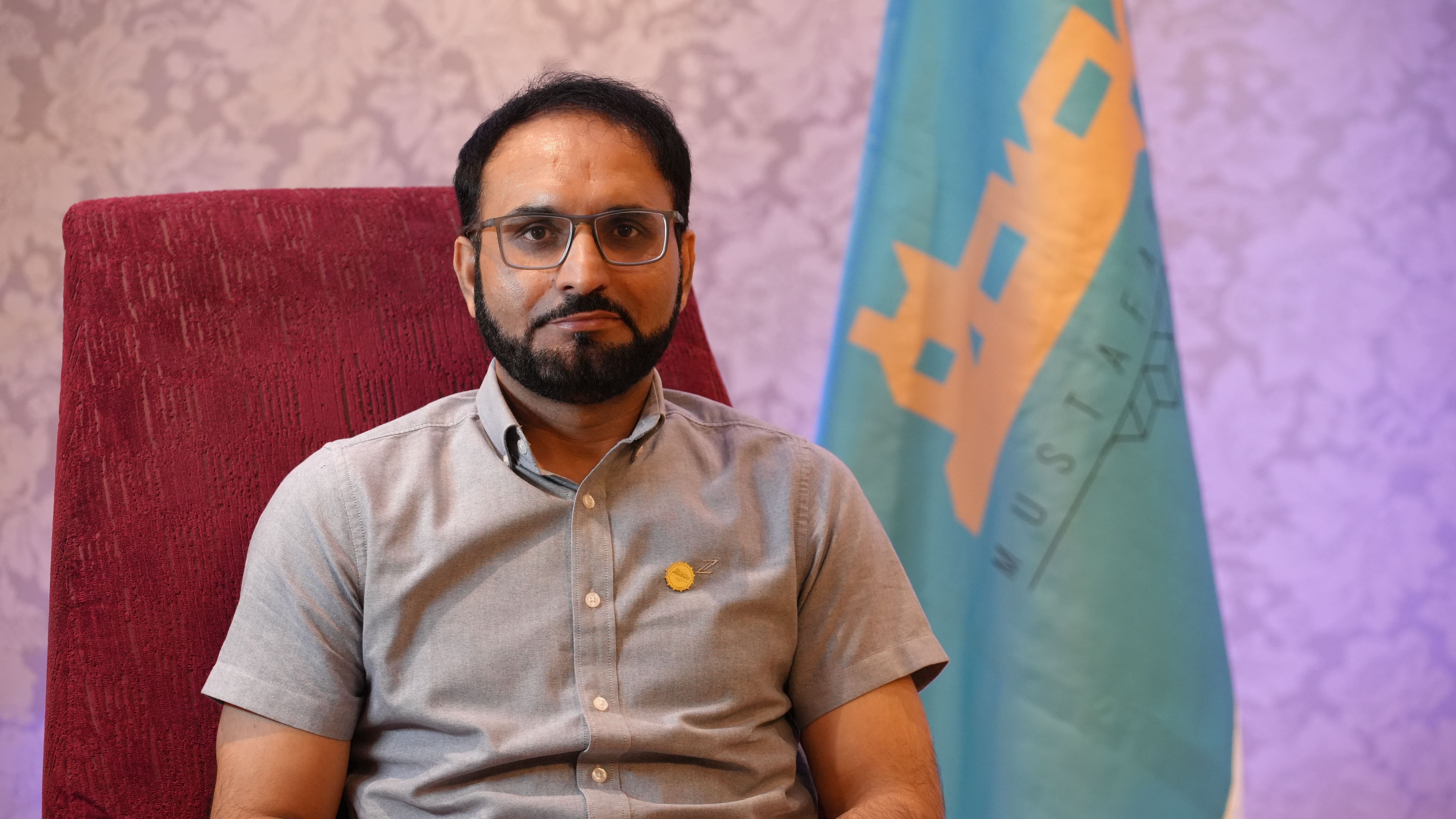
The Turkish Buse Cevatemre was one of the three young scientists who were awarded the Medal last September at the Iran Academy of Sciences. She was recognized for her research on identifying cancer cells’ adaptation and resistance to chemotherapy treatments through epigenetic modifications and micro-environmental interactions.
The first part of our interview, The Curse of Cancer Broken by Young Scientist Medal Winner, has been published. In the following, read the second part of our interview conducted during her stay in Iran for receiving the award:
Do you think drug resistance is mainly driven by pre-existing Epigenetics?
I think it might be because of pre-existing Epigenetics, but we also know that tumor cells are very responding and adapt quickly. So, in our experiment, when we hit the cells with chemotherapy, they just upregulated the transporter, or ABCB1, and by upregulating this protein, they just pumped out the chemoterapeutics. So, they became resistant to the therapy.
Please elaborate on the experimental model that you used.
The main concern was the relationship between BRPF and ABCB1. Our hypothesis was that BRPF, as a reader, can read the promoter and regulate the ABCB1 expression. Therefore, we performed an epigenetic drug screening using cell viability assays to see what happens when we hit the cells with epigenetic drugs.
Then, we performed transcriptomic and RNA sequencing to get a deeper grasp of cell changes when facing epigenetic drugs. After that, we carried out several intermediate validation steps, using qPCR, to validate the RNA sequencing. We also used Western Blot to validate the expressions of key proteins such as ABCB1.
Next, we performed Chip qPCR to understand how BRPF is linked to ABCB1. This allowed us to identify the specific genome positions taken up by proteins attached to DNA. Ultimately, we chipped the chromatin and performed qPCR specific to the ABCB1 promoter and observed that BRPF goes to ABCB1 promoter and regulates expression
And did you conduct in vivo experiments on mouse models, too?
We made several attempts at that, but we were not able to grow those resistant cells in mice. Due to reasons that are unknown, these cells didn’t want to grow on mice and were really inefficient compared to their parental counterparts. What’s interesting is that we also had sensitive counterparts from which resistant models were driven. These sensitive lines grew very well, but the resistant cells, when inoculated in mice, didn’t grow.
How will these findings be translated into clinical treatments?
Right now, I don’t find it realistic to just move onto clinics. Either we or other researchers have to show that BRPF inhibitors are potentially efficient in mice models and after that, it has to be tested in clinic. However, a lot of inhibitors failed at this stage as they might have off-targeted effects so we also wanted to see that it has efficacy on the target.
If you want to move to the clinical stage, would patients be selected based on biomarkers?
Yes. And I hope this is my future area of research. It is of utmost value to see which patient is going to respond to which therapy. I think that patients have to have ABCB1expression because when we applied the BRPF inhibitors to ABCB1 non-expressive cells, they were not effective. Therefore, there has to be an ABCB1 expression to get the maximum efficacy from the BRPF inhibitors.
Personalized medicine?
Yes.
Can you tell us about your project vision? What will your research goals be in the future? Will they be applicable to real life, for example to patients or rural areas?
That’s a very good question. We worked on dominant cell lines, so we have to test it first on mouse models, which we actually tried but the tumors didn’t want to grow in mice. So, as I mentioned, we could not perform the in vivo experiments. I would really like to see the outcome of the research in patients. From the beginning, we identified some targets in those cells. Maybe in the future, if some inhibitors are developed that are very potent in patients, I can see it.
What is your daily life like? When we talk about the life of a great person, we often imagine an extraordinary lifestyle. So, can you talk about what your real life is like?
I work very hard so I barely have nights off or Bayram (holidays). Also, I’m not the type of person who takes days off. Overall, I really enjoy my life. My husband and I often have conversations in the morning about his job and mine. There is a balance between my personal life and academic career.
How do you manage to bring about this balance and maintain your relationship?
We have a lot to talk about on science, arts, and the entertainment industry. My husband loves my job and I love his—he is an actor. I go to the sets of his TV shows. People work really fast there, which I find really interesting.
You also do scientific drawings and illustrations. Can you talk about that?
Since childhood, I have had a knack for details. When I was fourteen, I drew an old Disney castle logo which amazed my father. My husband has printed it on a mug and we still keep it in our house. I used to draw all the time, and pay attention to details and colors. When I think about those times, I realize that I was always that way. Also, I won BioRender's Graphical Abstract Contest in 2020.
Your work became really popular.
Yes, it had around 30,000 downloads, and participants were from the most prestigious universities of the world, which made it even more impressive.
How did you turn out to be the person that you are today? How did you accomplish so much?
I’ve always said that family is really important.I was raised by hardworking parents. My mother, father, aunt, and sisters have always supported me. They attended every award ceremony of mine and they still do. I love them so much, and I cannot appreciate enough what they gave me. They would even wait to pick me up outside the laboratory at midnight if needed. They constantly reassured me that I don’t have to cook or clean. They told me, “Just do what you do”. They were always supportive in every aspect.
Is this your first time in Iran? How do you feel about being here and receiving the Young Scientist Medal?
Yes, it is my first time in Iran. I know that Umran Inan, our previous president (of Koc Univeristy), received the Mustafa(pbuh) Prize in 2019. When I got an email from the Mustafa(pbuh) Science and Technology Foundation, I messaged him and he replied, “You should go and get it.” He said it’s going to be really great. So, I decided to personally come to Iran to receive the Medal.