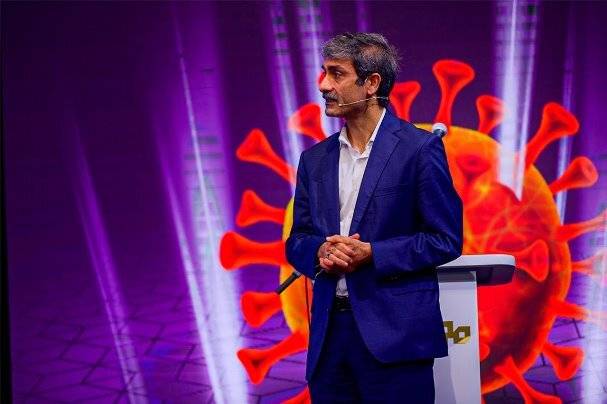
Reprogramming Cells, Restoring Function: New Frontiers in Parkinson’s Research
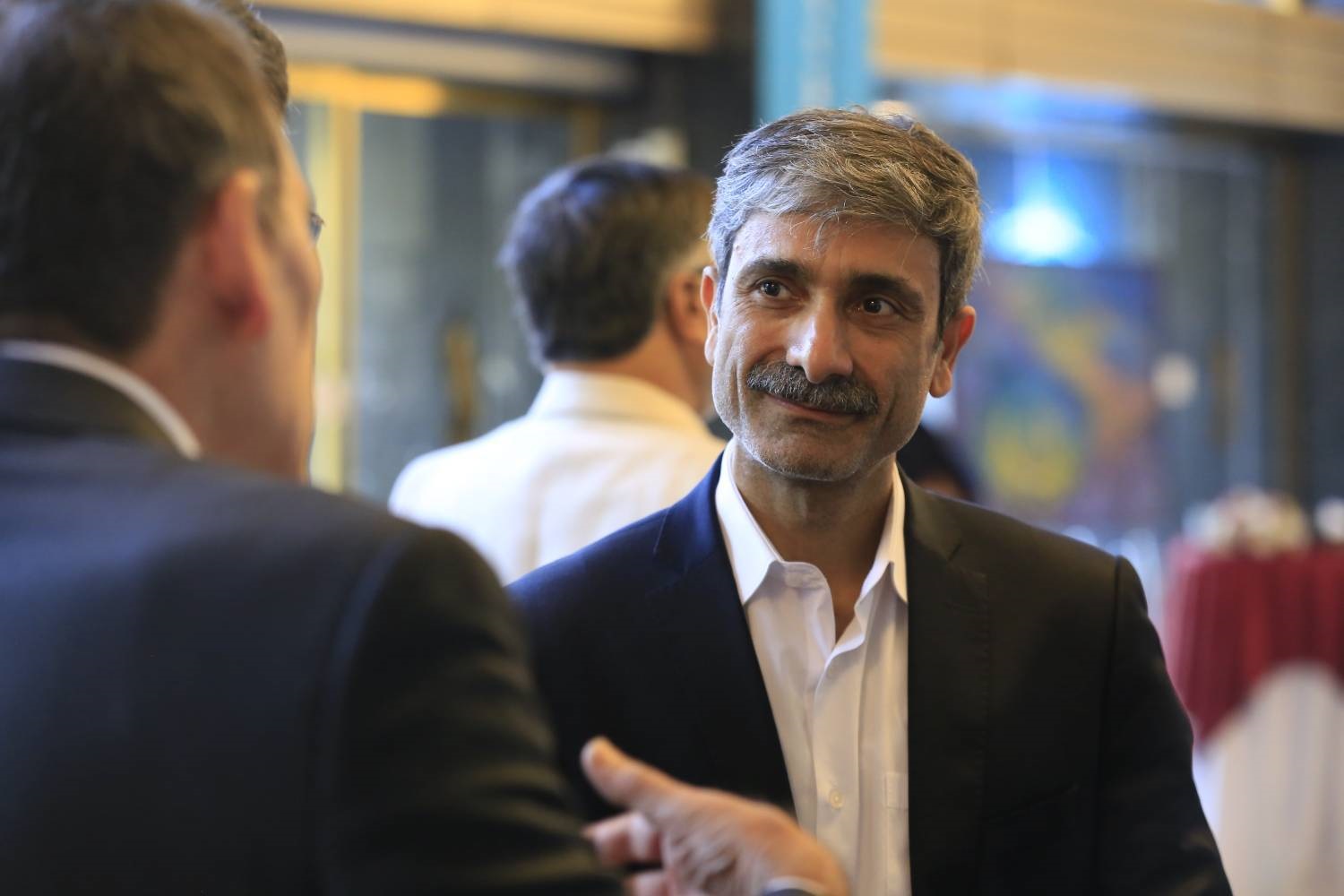
“Our research team at Royan Institute is prepared to transplant stem cells to human body for treating Parkinson’s disease,” says Dr. Hossein Baharvand, a faculty member at Royan Institute.
MSTF Media reports:
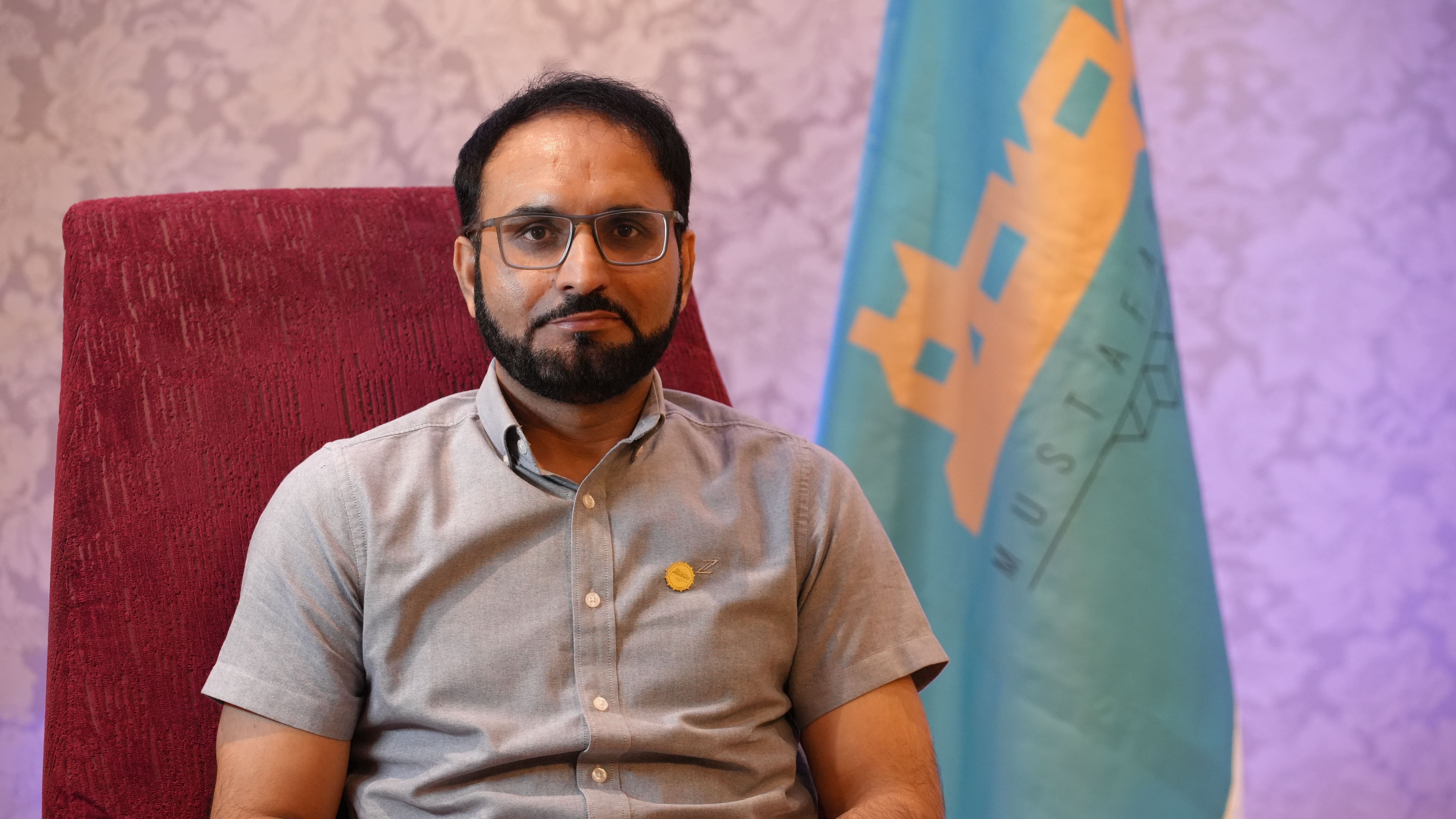
Hossein Baharvand, stem cell and developmental biologist and a Mustafa(pbuh) Prize laureate, in an interview with MSTF, talked about his best teacher, nature, and advances in Parkinson’s disease research, announcing that his team is ready to transplant pluripotent stem cells to human samples.
The distinguished professor, who is a founder and director of Royan Institute for Stem Cell Biology and Technology, is a known figure in Stem Cell research not only in his home country, Iran, but also all around the world.
In the 90s, Baharvand, along with a few up-and-coming researchers, took the first strides in stem cell-related research, a path he has ever since been treading with rigor.
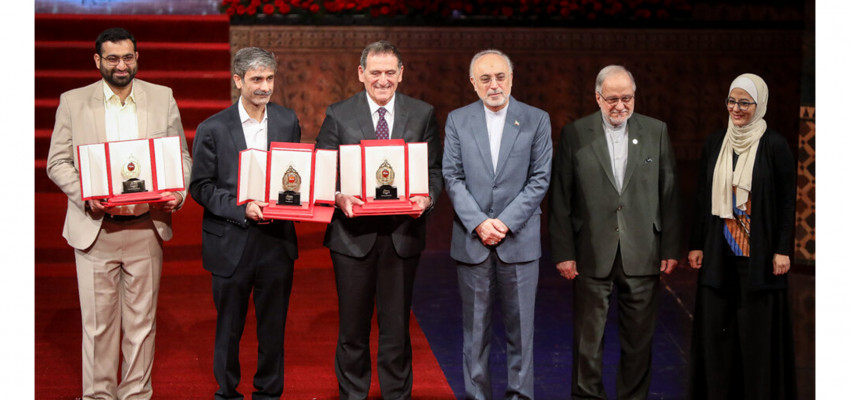
A large part of his efforts has been focused on the treatment of Parkinson’s disease and age-related macular degeneration (AMD), for which he was honored at the 3rd edition of the Mustafa(pbuh) Prize in 2019. Ever since, he has kept conducting further groundbreaking research on these two areas at Royan Institute. He has also founded several research centers across cities in Iran.
Going through his indebtedness to nature, Baharvand elaborated on his work in stem cell research, especially pluripotent stem cells. The professor emphasized that, at the outset, he chose this path to discover how and why certain phenomena occurred. It was only later that his research gravitated towards therapeutic approach for certain diseases.
In the following, read the second part of our interview with the Mustafa(pbuh) Prize laureate.
At the beginning of the interview, Baharvand paid homage to his beloved professor from whom he has continuously learned various lessons over the years: nature. Nature, according to him, is a tool for learning just as a great poet has beautifully pointed out:
For a conscious human, the green leaves on trees are like pages on a notebook revealing divine wisdom.
Lesson One: There is no shortcut to perfection
The first lesson Baharvand has acquired from nature is that perfection is a gradual process and there is no shortcut for progress.
“If you want to be a researcher, an entrepreneur, or a creative person, you have to take a slow and steady path, not a path that involves steps that are quick but occasional. Such path will lead to success,” the professor duly advised.
Lesson Two: Progress comes with challenges
The Mustafa(pbuh) Prize laureate contended that progress goes hand in hand with difficulties.
“The world has not been designed to provide human beings with unmitigated and endless comfort and well-being,” he stated. “Maybe about 30-40 per cent of our existence is accompanied with ease. As God Almighty has said in Quran, ‘We have created human beings to be in difficulty and hardship.’”
Baharvand interprets this “difficulty” as a factor in human growth. He believes that just as biological evolution is a result of challenges, the evolution of one’s character is also caused by such challenges.
“The world is created in a way that such conditions arise. It does not matter if you live in a good country, lead a big company, or are a huge creature. If you can’t deal with a challenge when it arises, you will be omitted based on the law of nature.”
He took dinosaurs as a case in point. These gigantic creatures weigh 30 tons and their height amounts to 30 cars being put on top of another.
“They ruled over the earth for 150 million years but couldn’t deal with a change that occurred in their lives—collision with meteorites or volcano eruptions and were omitted,” Baharvand stated.
It was then that our biological ancestors attained a new characteristic, i.e. recognition. Human being learned to take refuge in a cave or under a tree if it got cold and managed to stay alive, thus leading to the existence of mammals who have taken inhabitance in forests, deserts, and seas from the North to the South.
“I always emphasize this point: To grow, first, we should welcome challenges, and, second, manage them. Otherwise we will perish,” he added.
Lesson Three: The difference between constructive death and fruitless death
As the third lesson, Baharvand referred to the function of our hearts and their fluctuation. According to him, “Heartbeat and its fluctuation mean life. If the line goes flat, it means death. Nevertheless, we have to acknowledge that death itself is also a part of our evolution and growth.”
Putting it in scientific terms, he named two types of deaths: apoptosis (planned death) and necrosis (death caused by injury).
Apoptosis occurs when, for instance, the fingers on the human hand are formed. When our hand or feet takes shape during our embryonic development they resemble a paddle. The cells between fingers or toes die in a parallel manner to shape the separated form of our hands or feet.
“The process is so meticulous that we won’t observe any traces of the death of the cells,” he explained. “It is just like the fall of a petal from a flower, hence its Latin name, Apoptosis.”
On the other hand, there is necrosis, death of cells caused by injury. It is like when boiling water burns the skin and the scars remain on the skin afterward.
Among these two types of death, only the former leads to growth, Baharvand contends.
He then drew our attention to sonnet 177 by Hafiz which, for him, makes the same case not every death is good death:
When one embellishes their face and body, this does not mean that they know how to love. Neither does everyone who fashions a mirror know the secrets of a magic mirror. Nor do the ones who put their hat on askew and sit in a dignified manner know how to rule and hold power.
Baharvand then regarded death as a pathway to a new birth, using an intriguing analogy:
“When inside our mother’s womb, we have multiple friends. The cells of the womb and kidneys, and blood cells keep us company in there. Then comes the day when the womb entrance opens and we get out of that dark space,” he maintained. “At the moment of our departure our friends bid us farewell, saying ‘he is dead,’ while our new companions on the other side the world say, ‘He is born.’”
Accordingly, death is also a threshold, leading us from one world say, mother’s womb to another. It is part of our evolution process.
Lesson Four: Empty niches, the secret of the emergence of new species
Nature’s next lesson, according to Baharvand, is that speciation takes place when a there is a niche or special position available to a new species.
To make the concept of a niche clear, Baharvand pointed out the difference between a woodpecker and a sparrow in terms of eating and flying.
“Imagine a woodpecker sitting on a tall tree, pecking at it, catching and swallowing insects, then flying high in the sky. A sparrow, on the other hand, sits on the ground when eating. It does not eat moving insects and flies at a relatively lower height.”
Woodpeckers and sparrows are two distinct species. Accordingly, their manner of nourishment and nest-making are different. This means that these two species have different niches. Different aspects of living such as flying height, type of nourishment, and nest-making all refer to a species’ niche, Baharvand contended.
Baharvand described niche as “essentially an n-dimensional super volume.” We may have identified several of its dimensions, he believes, but other dimensions may be discovered later, for example, the type of tree, plant, or animal living near it or not living. They all constitute various dimensions of a niche allowing a species to exist.
“If two species have identical niches, one of them has to be definitely obliterated (the principle of competitive exclusion). If we want to add a new species, we need to create a new empty niche.”
Royan’s Mission: Carving Niches for Talents
Baharvand concluded this part of the discussion by extending this law of nature to the management of human resources and scientific advancement.
“If we want to have skilled researchers, doctors, engineers and sociologists we need to carve niches for them. Each of these individuals equals a new species therefore requiring their own special positions,” he argued.
Baharvand and his colleagues at Royan have been trying to make new vacant niches for future talents to grow in. The professor talked about one such niche, called Avecinna Royan Institute, which was recently created with the help of Dr. Mohammad Hadi Imanie, the governor of the province of Fars and Dr. Ali Malekhosseini, the father of liver transplant in Iran, and varioius benefactors.
The name of the center is a combination of “Royan Insitiute” and “Avecinna Organ Transplant Center in Shiraz” which is one of the major centers for treating infertility and diagnosing genetic diseases.
“Approximately 20 per cent of couples in Iran face the problem of infertility,” Baharvand informed. “We established a new niche with the help of benefactors to advance this research area.”
Baharvand also pointed out the establishment of a comprehensive treatment center for transplant, cancer and infertility, and a center for medical genetic diagnosis, and a small research center to train future researchers and lay the foundation for a fourth-generation university there.
North Iran and the Prevalence of Cancer
“We once received a female breast cancer patient whose husband had gotten a divorce after hearing about her disease. Even hearing about such a thing is devastating, let alone experiencing it,” Baharvand stated.
Some cancers like gastrointestinal cancer are more common in North Iran. To address this issue, Baharvand has been meeting benefactors in the northern cities of Iran and finally established a cancer medical institute in Babol. The center’s goal is to screen cancer, especially breast cancer and gastrointestinal cancer.
“I remember that our budget was not enough to buy ceramic tiles for the place. Wherever I gave a speech I concluded it by talking about the center and asked people to donate money. Once I received a phone call from a benefactor asking about how the center was coming along and then he offered to donate 3000 square meters ceramic tiles.”
This joyful incident had then reminded Baharvand of this verse in Quran: “And he will receive his bread from an unexpected place.”
Asked if the center has started working, Baharvand stated that the center in Shiraz was founded on Eid al-Ghadir in 2024 and officially started working the same year in October.
“In Babol we are preparing a limited surgery center for screening. Currently we are at the final stages of preparing the building and buying fundamental machines such as colonoscopy and mammography equipment. I believe it will be opened in a month.”
Asked if the centers will focus on particular cancers such as breast and gastrointestinal cancers, Baharvand announced that they will mainly focus on screening and diagnosis.
He emphasized that the question that they have posed at the center in Babol demands an answer: “why is cancer particularly breast cancer and gastrointestinal cancer so prevalent in this region?”
“We do not seek to provide treatment only,” he claimed. “Prevention is just as important. We seek to teach people to change their lifestyle.”
“The faster the diagnosis, the easier the treatment. If breast cancer is diagnosed at the early stages, there is a 90 per cent chance of treatment. But the chance decreases in later stages,” he informed.
A Niche for the Most Complex Phenomena in the World
Baharvand introduced another niche which is being created for studying the most complicated phenomena in the whole wide world: the human brain.
Elaborating on the characteristics of this amazing organ and its wonders, Baharvand added, “The brain weighs 1.4 kilograms and is really long. To be able to fit in our skulls it has gone through countless twists and turns, which if undone, can carpet 1.8 square meters.”
“Our brain contains about 100 billion nerve cells and another 100 billion cells tasked with their nourishment and maintenance. Though light, the human brain consumes one-fifth 20 per cent of body’s glucose, claiming its share instantly.”
Only 3 millimeters of the abovementioned 1.8 square meters, Baharvand contended, contains 6 layers holding 20 billion neurons, each of which is connected to 7000-42000 other neurons. This amounts to 15 per cent quadrillion (150,000 billion) direct connection of neurons!
The wiring in the brain amounts to 800,000 kilometers. To get a grasp of the size of this, Baharvand invited us to imagine the circumference of the earth which is 40,000 kilometers. This means the wiring in each of our brains equals 20 rounds around the earth!
He pointed out that the structure of the brain, fixed as it may seem, actually involves a lot of changes in terms of the quantity and manner of connection between neurons, particularly when we are learning something. This is why memory, attention, love, sadness, and various other feelings are created.
“The same brain makes the James Webb Telescope which is able to discover 13.6 billion light years away from earth,” Baharvand added regarding the wonderful capabilities of the human brain.
The question is how can we get more information about the brain itself?
From Autopsy to Organoids
Baharvand explained that a traditional way to study the brain is to wait for somebody’s death, pull out his brain and study it. This method does not yield useful results most of the times. Another method is to build structures in small dimensions 3 to 4 millimeters resembling the brain using pluripotent stem cells. Called cerebral organoids or brain organoids, these structures only partially simulate the brain. If we want bigger structures we need to create a system for transferring blood in them, but scientifically there are limitations to that right now.
He further elaborated on organoids, how they’re created and what applications they have.
“Just like when you reset your computer to factory settings, clearing all its data, we can clear your cell data using cell sample taken from blood, urine or skin and reset it to its embryonic form,” he explained. “We can program it and turn it to lung cells or heart cells or nerve cells. This is how we make organoids in the laboratory.”
The organoid can serve as models for studying conditions such as autism or some forms of Parkinson’s disease which are genetic. They can also serve as tools for understanding the function of the brain and development of neurons.
“We can even train them. It is not far-fetched that in the future we see computers that work based on these nerve cells,” he added.
Biocomputing: Brain-Inspired Processing
Instead of the current silicon processors, we may be able to have biological processors in the future. Why would we need those? Silicon processors use a lot of energy. A supercomputer, for example, uses 20 million watts, while the human brain uses only 20 watts, one million times less!
How can we learn from the brain and use the knowledge to advance technology? The biggest challenge for advancing AI, according to Baharvand, is energy supply. Therefore, fundamental change needs to be made in processors and one of the best alternatives are nerve cells.
“An interesting fact is that the AI we use today is built based on studying the part of monkey brain related to vision. If we want to advance the science we will need to meticulously study the structure of the eye and brain organs.”
The question may arise: can we train lab-built nerve cells and get responses from them? The question is the basis of Biocomputing or biological computation which concerns computers built based on actual nerve cells. Although these systems can currently do no more than simple computations and computer games, Baharvand believes there is a good chance that they will develop in the future.