Raptor Codes and the Mathematics Behind Reliable Communication
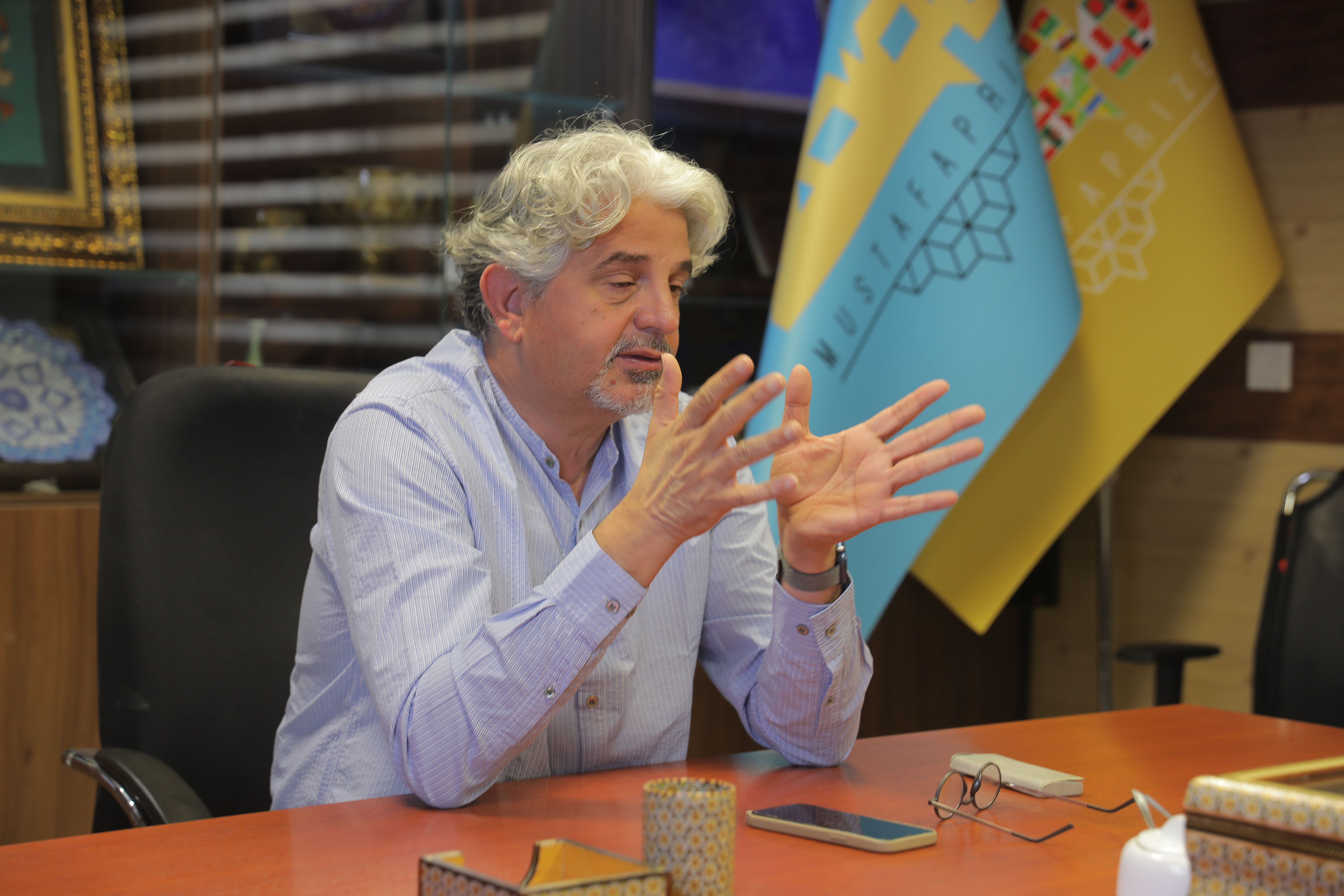
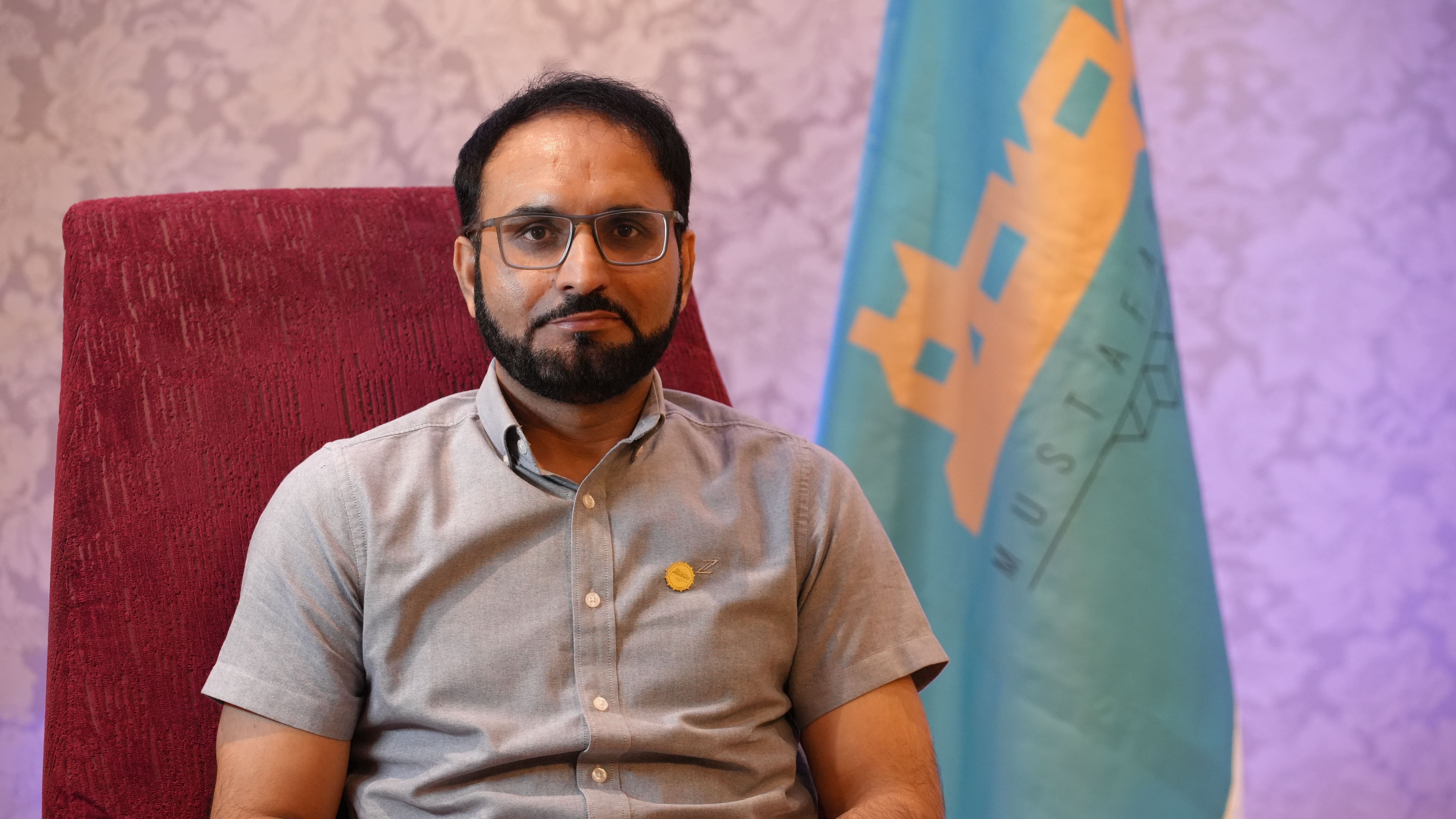
Mohammad Amin Shokrollahi, a Mustafa(pbuh) Prize laureate who has revolutionized digital communication by combining number theory and the science of coding, talks about his journey through life.
MSTF Media reports:
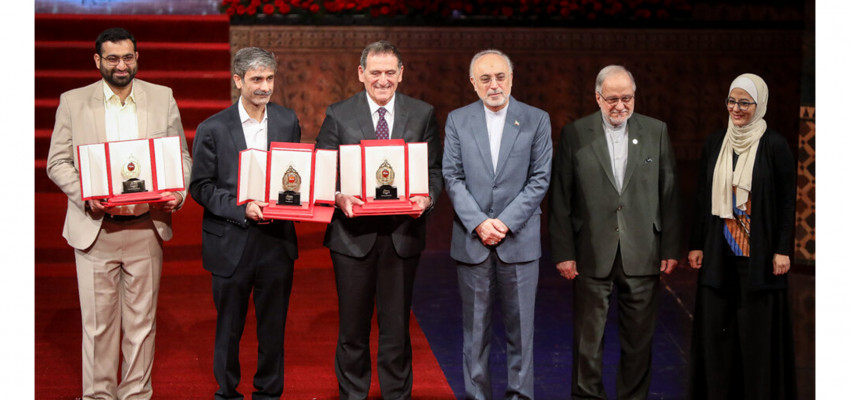
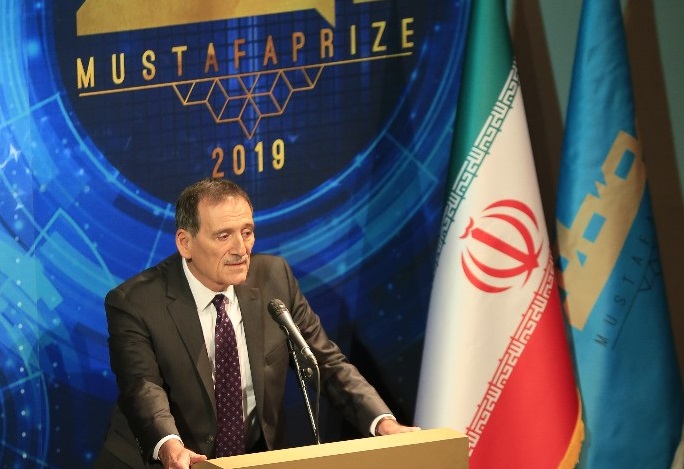
Professor Shokrollahi invented the Raptor code in 2001. Offering error correction and this novel coding algorithm has been increasingly used in coding in various areas such as wireless communication, data transfer, and data compression. His breakthrough earned him international recognition, leaving a remarkable impact on the communication industry. In 2017, he won the Mustafa(pbuh) Prize for his Raptor codes.
Shokrollahi’s recent interview with Mehr News Agency offers a glimpse into his early interest in math owing to his family’s teachings, his academic path in Germany, and the way he reconciled his knowledge with industry and entrepreneurship in various countries such as the U.S. and Switzerland.
We bring this interview to you in two parts: first, his life starting from early days to now, and second, his scientific achievements.
Early Life and Education
Growing up in Central Tehran: a Family of Engineers and Educators
Shokrollahi’s immediate family consisted of his parents, two elder sisters and two young brothers who lived together with his uncles and grandparents in a small house near Towhid Square in Tehran.
“One of my uncles studied math at Sharif University of Technology and the other taught math,” Shokrollahi said. “From the age of five, I learned math and concepts such as set theory, logarithms, and geometry from them. They believed that geometry is the foundation of math.”
He also reminisced that he really liked to go to school like his older sisters. Moreover, he revealed a partial reason why he became invested in studying hard.
“We were not financially well off and my family believed that by acquiring knowledge we could improve this aspect of our life,” Shokrollahi stated.
He recounted how all his four siblings pursued their interests, studying accounting, industrial engineering, electrical engineering, and mechanical engineering, from the eldest to the youngest, respectively. One of his uncles who has just turned 84, is still teaching new generations.
Entering German School Tehran at nine and Getting a Hard-earned Diploma
“At five, I went to a school for exceptional talents. When I finished 4th grade at nine, my mom saw an ad in the newspaper about the German School Tehran,” he continued. “Since my father worked at Bayer, I had some knowledge of the language.”
According to Shokrollahi, those students who passed the school’s entrance exam could begin their 5th grade there.
“The school allowed us fourth-graders to study as we would in a Persian school, meanwhile including an intensive course of German so that we were able to learn the language,” he maintained. “In 6th grade, math and other basic subjects were taught in German while literature, history, and religious studies were taught in Persian. I always loved math and physics but there were subjects I was not good at, such as biology, but we had to study all the subjects.”
Shokrollahi then explained why he had to go to Germany to get his high school diploma.
“Back then, the German school system required students to study for 13 years, after which they got their diploma. I studied 9th and 10th grades in the same year,” he said.
Completing two grades simultaneously led Shokrollahi to advance to the 11th grade, where he was two years younger than the rest.
Academic Turning Points
Scholarship in Germany and a Return to Mathematics
Shokrollahi finished the 13th grade and then entered university, where he intended to obtain an educational exemption which he was refused because it was only given to those students studying in technical or medical fields.
“So, I opened the handbook which contained a list of majors. The first technical field I saw started with a B in German. It was called road and construction engineering, and I decided to study this field,” Shokrollahi stated.
He started studying on a scholarship provided by the government. In his first year, since he knew university-level math, he informed the university that he was able to take the math exams for terms one and two right away. He took the exams and continued studying for a year.
“Every year, the scholarship organization interviewed a scholarship student to assess the condition. When they realized that I had passed the math courses without taking any classes, they asked why I did not study math,” Shokrollahi added. “I said I couldn't get an exemption, upon which they inquired if I had gotten the exemption by studying road and construction. I answered in the negative. Then they said, ‘Study math then.’ I also received a study exemption after three years and came to Iran. I was nineteen at the time.”
Earning a Doctorate through Self-Direction
Shokrollahi explained his university studies, saying, “Because I was sixteen when I went to Germany, I needed a guardian. One of the Bayer employees in Iran who wanted to return to Germany had said that he would be my guardian. After receiving my diploma, I went to my guardian, and my other friends also followed me to Karlsruhe and started studying there.”
The next step for Shokrollahi was to decide which university to apply to for a doctoral program. “One of the professors at Karlsruhe, whose work I liked, went to Bonn, and we went too, and I got my doctorate,” he said. “But I worked on my own. I didn't have a supervisor at all. I did the research by myself and got my degree.”
He then talked about his love for pure mathematics, saying, “What I was very interested in was to first learn pure mathematics and use it in industry. Applied mathematics usually involves numerical mathematics, but I wanted to turn pure mathematics into applied mathematics.”
An early example of this was his student job where he sold prime numbers. “One of my professors in Karlsruhe introduced me to coding. I was in contact with different companies that wanted us to sell prime numbers with certain properties to them. This professor taught me how to write invoices for companies, and it started with how to introduce pure mathematics into the industry. I became interested in this subject and gradually found my way from there.”
Integrating Number Theory with Coding Theory
Shokrollahi stated that what he was interested in was number theory. He initially became familiar with coding and realized that algebraic theory and coding exist.
“First I learned them and then I saw that my two different areas of interest were in fact related. That's how I got into my personal interest, which had a lot of application in the industry.”
Getting from algebra to coding happened early in his mathematics education and it was not something introduced to him by a professor, as he states.
He also recalled one of his professors, Dr. Beth who had understood what he wanted to work on and was interested in working with him. “Unfortunately he died at a relatively young age,” Shokrollahi said. “I always found it strange that he liked to work with me.”
Dr. Beth set up an office for him at the University of Karlsruhe, where he had access to everything he needed.
“I was free to ask him questions and he guided me to write my first scientific paper. This was from 1985 to 1988,” Shokrollahi recalled.
“We observed some coding, and Dr. Beth told me, ‘With this number theory information you have, you can work in this field.’ I continued, and I solved some of the problems in my master's thesis. Then I did the rest in my doctoral thesis, using them in the theory of computation,” he added.
Shokrollahi also mentioned another professor in number theory with whom he integrated number theory with coding theory.
Navigating post 9/11 Hostility: from Germany to America and Back to Europe
Shokrollahi then talked about the next phase of his life, which involved his marriage and moving to Europe.
“My wife and I got married in the U.S. in 1997 when we were at UC Berkeley. Then we moved to New Jersey and then back to California,” he stated. “Then, 9/11 happened. After that, we had to move to Switzerland because the atmosphere in America was not good. Switzerland was a completely neutral country.”
Shokrollahi, who had worked in a lab in America, started working at Digital Fountain as a chip scientist. “I worked for that company at night and for the university during the day,” he maintained.
Asked if he continued collaborating with Digital Fountain, Shokrollahi said, “After returning to Europe, I worked with them for a while. In 2009, when the company was sold, I worked with a new company for a year, and after two weeks of collaboration, I came up with ideas for my company Kandou and then I established it.”
The Birth of the Tornado Code
Before joining Digital Fountain at Berkeley, Shokrollahi solved a problem which is called tornado code, which he explains as such: “When you are correcting errors, for a while you see that nothing happens and none of them are corrected, but suddenly all of them are corrected at once. It's like a tornado is forming which you don't know about. It was a strange characteristic that we had never seen before. That is why we called it tornado code.”
He further added, “We designed this for erasure channels. Then we moved on to more complex channels. Two other researchers at Bell Labs wanted to take this further for much more complex channels. They told me that I can join them and we can make progress with ideas regarding erasure channels.”
At EPFL: Advancing the Raptor Code
After this, he went to the Swiss Federal Institute of Technology in Lausanne or EPFL in Switzerland, where he continued working on the Raptor.
“We created different versions to make this code faster and less prone to errors, until 2009, when the company was sold to Qualcomm, and according to my contract, I had to work for Qualcomm for a year,” he maintained. “Then we reached version 12 (if I'm not mistaken, the last version we made) of Raptor, which is being used.”
Two weeks after his contract with Qualcomm ended, he came up with new ideas for Kandou. “I was good at research,” he said, “but I was more interested in solving a problem that also concerned industry.”
On Receiving the Mustafa(pbuh) Prize and Advice to Young Mathematicians
Regarding his feelings upon receiving the Mustafa(pbuh) Prize, he humbly said, “I have done less work than others, for example, Dr. Omar Yaghi, who received the Nobel Prize in 2025. I don't really believe that what I did should be acknowledged with an award.”
Rather, what Shorollahi finds important is that his findings are used in the industry. “Receiving these awards is important,” he added, “but I usually look more to the future than the past.”
One significance of receiving the Mustafa(pbuh) Prize, according to him, was that his family got to see his success firsthand because they hadn’t been in Germany or America to see it. He also said that recently, when he was in Iran with his wife they went to Pardis Technology Park because his wife was keen to see his bust there. “She even took a picture and sent it to our family and friends,” he added humoredly.
Asked to give a piece of advice to those who are studying mathematics, Shokrollahi pointed out the importance of being open to new experiences.
“Many people like mathematics for its own sake. If they plan to enter the industry through pure mathematics, they must be prepared to put aside everything they have learned and brace themselves for learning new things,” he believes. “Similarly, I remind my colleagues at the company that they need to step out of their comfort zone, otherwise their ranking will not improve.”